

best ar-15 bipod for fall 2026 long range shooting under $100 for veteran marksmen
🏆 Top Picks at a Glance
 #1
Best Overall
V10 Carbon Fiber Tactical Bipod, QD Spring Return Bipod with 20mm Picatinny Weaver Rail Mount for Long Range Shooting
$75.99
Check Price → #2
Also Consider
13-27 Inch Tactical Bipod Pivot Tilt with Pod Lock Swivel Lever for Long Range Shooting
$56.99
Check Price →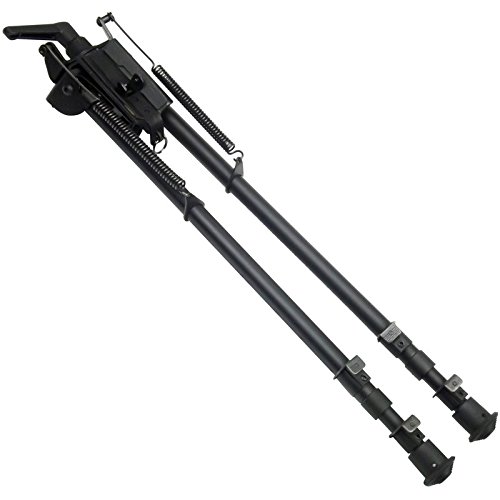 #3
Also Consider
FeelRight 13-27 inch Long Range Bipod with Pivot Podlock Heavy Duty High Shockproof Shooting Swivel Style Bi-pod
$56.31
Check Price →⚡ Quick Answer: Best Personal Development
Best for Range Gear Transport: Range Day Shooting Lifestyle Tote Bag
$18.99 — Check price on Amazon →
Table of Contents
Main Points
Our Top Picks
Affiliate disclosure: if you buy through these links, we may earn a commission at no extra cost to you.
Factors to Consider
Frequently Asked Questions
What's the difference between a bipod and a monopod for long-range shooting?
Bipods offer two-point stability and minimal wobble—essential for 300+ yard precision work. Monopods are faster to deploy and lighter, but they can't match bipod rigidity for sub-MOA accuracy. For dedicated long-range shooting under $100, a quality bipod beats a monopod every time.
Can I use a Harris bipod on an AR-15 with a free-float barrel?
Yes, Harris bipods attach to the front sling stud, which doesn't interact with your free-float tube. The sling stud is solid steel and won't affect barrel harmonics. This setup is one of the most common configurations for AR-15 precision builds.
How much does bipod weight actually affect shooting accuracy?
A 12-ounce bipod on a precision rifle has minimal impact on accuracy—the platform stability gain far outweighs the weight penalty. Most long-range shooters prefer the added weight for recoil management and consistency. Under 100 yards, bipod weight matters less; beyond 300, the rigidity benefit is measurable in tighter groups.
Should I buy a Picatinny bipod or a swivel-stud bipod for competitive long-range shooting?
Picatinny mounts are more stable for fixed competition strings and give you precise angle repeatability. Swivel-stud bipods are faster for hunting and transition drills but can rotate under heavy recoil on lighter AR platforms. If you're shooting under $100 and want one rifle for both applications, swivel-stud is the versatile play.
Do I need a quick-detach bipod or a fixed one?
Quick-detach mounts add $15-25 to cost but save setup time between stages or hunting situations. Fixed mounts are more rigid and won't loosen—acceptable if your rifle stays configured for one purpose. For fall 2026 long-range work, fixed is fine; add QD only if you're switching roles frequently.
What's the minimum bipod height I need for long-range prone shooting?
Fully collapsed, your bipod should sit 5-7 inches high to match proper prone position cheek weld and scope height. Minimum leg extension of 8-10 inches ensures you can shoot on slight terrain variations. Most quality bipods under $100 meet these specs; verify dimensions before purchasing.
Can I use a Harris bipod on a piston gun or do I need a direct impingement AR?
Harris bipods work on any AR platform—piston, DI, or short-stroke—because they attach to the fixed sling stud. The bipod doesn't interact with your operating system at all. Your platform choice doesn't matter for bipod compatibility.
Conclusion
Under $100, you're choosing between proven friction-lock stability and faster deployment systems. Harris and comparable competitors dominate this price tier because they deliver repeatable accuracy without gimmicks. Commit to Picatinny or swivel-stud, lock in your height and pan range, and you've got a legitimate precision tool that works on any serious long-range AR-15 build.


